 Cranbook

Fire Prevention Week 2026 – “Charge Into Fire Safety: Safe Charging Is A Superpower”
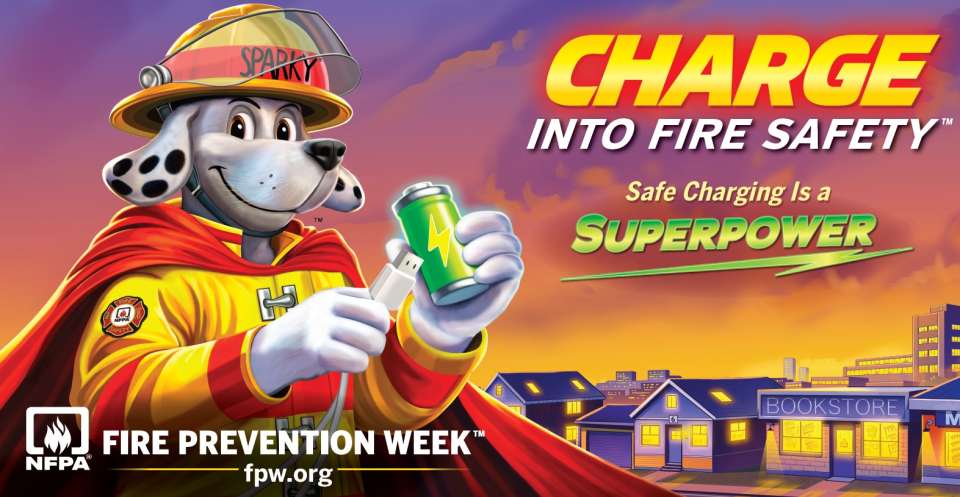 Cranbrook, BC (October 5, 2026) – Cranbrook Fire and Emergency Services is urging residents and businesses to power up safely and help stop battery fires before they start. It is Fire Prevention Week from October 4 to October 10, 2026, and we encourage you to make safe charging your superpower, by using the right charger, choosing a safe place to plug in, and act fast at the first sign of trouble.
Many devices used in our daily lives - phones, tablets, laptops, tools, toys, e-bikes, and scooters—run on rechargeable lithium-ion batteries, which store a lot of energy in a small space. If they are damaged or charged the wrong way, they can overheat, start a fire, or even explode.
“The way you charge your lithium-ion battery devices can make a difference in helping prevent home fires,” says Chris Churchill, Fire Prevention Coordinator with Cranbrook Fire & Emergency Services. “It comes down to using simple habits each time you plug in. A working smoke alarm is the number one safety device you can have in your home to keep you and your family safe. Keep one on every level of your home, especially outside of sleeping areas.”
- Use the cord and charger that came with your device or one approved by the manufacturer. Using the wrong charger can damage the battery and increase the risk of fire.
- Charge devices on a table, desk, or other hard, flat surface. Do not charge them on beds, couches, or under pillows. Devices and chargers produce heat during normal charging. Soft surfaces can trap heat and block airflow, which can cause the battery to overheat.
- Stop using your device if it feels very hot, starts to swell, is smoking, or has a strange smell. These are warning signs that the battery may be damaged or failing.
- Unplug your device when it is fully charged. Do not leave it plugged in longer than needed. Leaving a device plugged in too long can increase heat and stress on the battery.
- Charge larger items like e-bikes, scooters, and power tools outside and away from exits. These batteries are larger and store more energy. If they fail, fires can grow quickly and spread.
- When on a plane, keep your device where you can see it while charging. Do not charge devices in overhead compartments. Do not charge e-cigarettes or vapes on a plane. If a battery overheats or fails, it is important for the flight crew to respond quickly.
You can learn more about lithium-ion battery safety online at www.fpw.org.


 Let us know what you think about our new site!
