 Cranbook

Cranbrook, BC (July 27, 2026) – Over the past few years, Asset Management has become a core part of how the City of Cranbrook does its work. While the term can sound like a buzzword, it simply means taking a thoughtful, proactive approach to caring for the physical and natural assets the City owns — from roads and water systems to parks, buildings, and vehicles.
This Service Spotlight series is designed to make Asset Management easier to understand and show how this quietly guides the everyday work the City does on behalf of the community.
At its core, Asset Management is about getting the best value from what the City owns by balancing cost, risk, and performance over the full life of each asset. Cranbrook’s Asset Management Strategy brings together years of planning, data, and best practices into a shared approach that helps departments make consistent, informed decisions. By focusing on regular condition assessments and long-term planning, the City strives to maintain and replace infrastructure at the right time, reduce risks, and plan responsibly — supporting reliable services today and for generations to come.
In this spotlight, we focus on one of likely the most visible services we provide: roads.
One of the most asked questions we get around our roads is how the City decides which roads need work. The Asset Management framework guides our team in determining which roads need work first. They look at the overall condition of the road (surface and the road bed), how much the road is used, if there are any known risks, any past repairs and overall inspection results. All of these important factors help determine which road need the most attention and where we can make the most positive impact with the budget dollars we have.
We also get asked about why some roads just get repaved, while others get new water and sewer services. It is a great question. This is really all about what you can’t see. If our data and inspection results tell us that the water and sewer infrastructure under the road has 20 to 30 years of life left, the most cost effective solution is to simply repave the road. But, if these services are at the end of their lifespan (indicated by leaks and past repairs) they need to be replaced before the road is repaved, otherwise you would be digging up perfectly good asphalt to replace those utilities.
Another question we often get from residents is around why their street is not being fixed when it is in worse condition that other roads that are being worked on. This is another great question. The fact is timing is everything when it comes to proper investment in infrastructure, and it’s a tough balance to achieve. We look at prioritizing arterial roads, bus and emergency routes and school zones as they provide a large portion of the service. If these roads fail, the negative impact is significant to a wider population compared to a local residential street. Also, repaving a road before it completely fails is much cheaper than waiting until it falls apart. This investment timing is critical as the City attempts to improve the level of service across the community. That being said, past investments in the major road network are now allowing us to address many of the local residential streets that are in need of work.
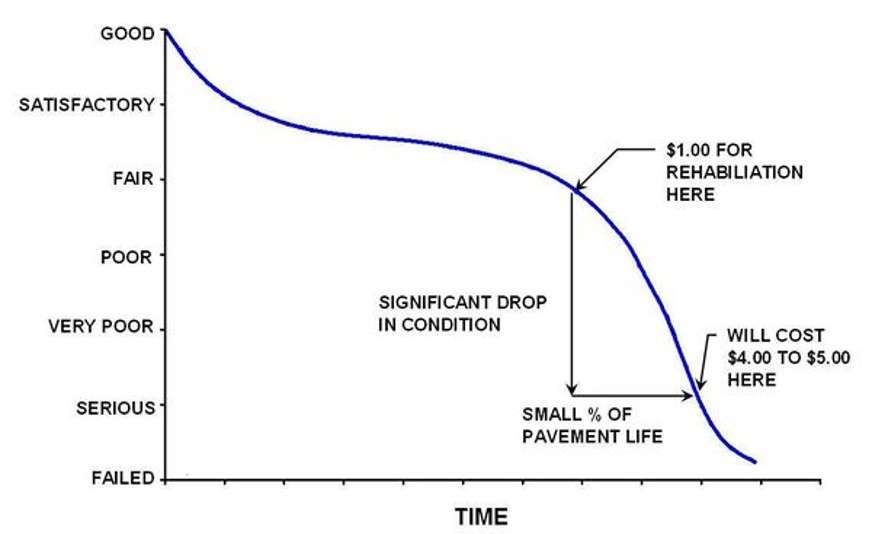
By taking this thoughtful, data-driven approach, we’re working to make the best use of available funding while keeping Cranbrook’s road network safe, reliable, and moving in the right direction. Not every road can be fixed at once, but each project is part of a bigger plan to look after the infrastructure residents rely on every day. Significant inflationary increases in construction costs, like fuel, materials and labour over the past 5 or 6 years, have added another layer of difficulty in balancing the need to increase funding and investment levels to maintain roads, while acknowledging the impact those increases would have on taxes.
Asset Management helps guide those decisions carefully, balancing today’s needs with the long-term costs of maintaining and replacing roads, underground utilities, and other important public assets. It is one more way the City is planning ahead, investing responsibly, and working to provide dependable services for the community now and into the future.
Looking ahead, we will continue to highlight how Asset Management shapes and directs the work we do. You’ll learn about how it influences our decisions around our spray irrigation site and lagoons. We’ll also continue to share some great successes we’ve had and how these efforts have helped us develop better processes and work more efficiently for you.
You can also find our previous Service Spotlight Series articles, and find more information about Asset Management @ https://cranbrook.ca/our-city/city-departments/oic/asset-management-service-series.


 Let us know what you think about our new site!
